
How To Stay Warm In A Tent In The Winter
This post contains affiliate links. As an Amazon Associate, we earn from qualifying purchases.
Staying warm in a tent during winter requires proper insulation, wind protection, and effective use of heat retention methods. Key steps include using a durable double-wall tent, insulating the ground with foam pads and a footprint, and reflecting heat inside with Mylar blankets. Securing the tent firmly against wind and layering sleeping gear with hot water bottles also helps maintain warmth. Further details and tips on these strategies will be explained in the following sections.
Essential Facts in 30 Seconds
- Use a durable, double-wall ripstop nylon tent with strong metal poles to block cold and moisture.
- Insulate the ground with a tent footprint and foam pads to raise floor temperature.
- Line tent walls and roof with synthetic panels and Mylar blankets to reflect heat inside.
- Secure the tent firmly against wind with heavy-duty stakes and guy lines, and maintain ventilation to prevent frost.
- Enhance warmth with sleeping bag liners, hot water bottles, and high R-value thick pads.
Tent Selection and Setup
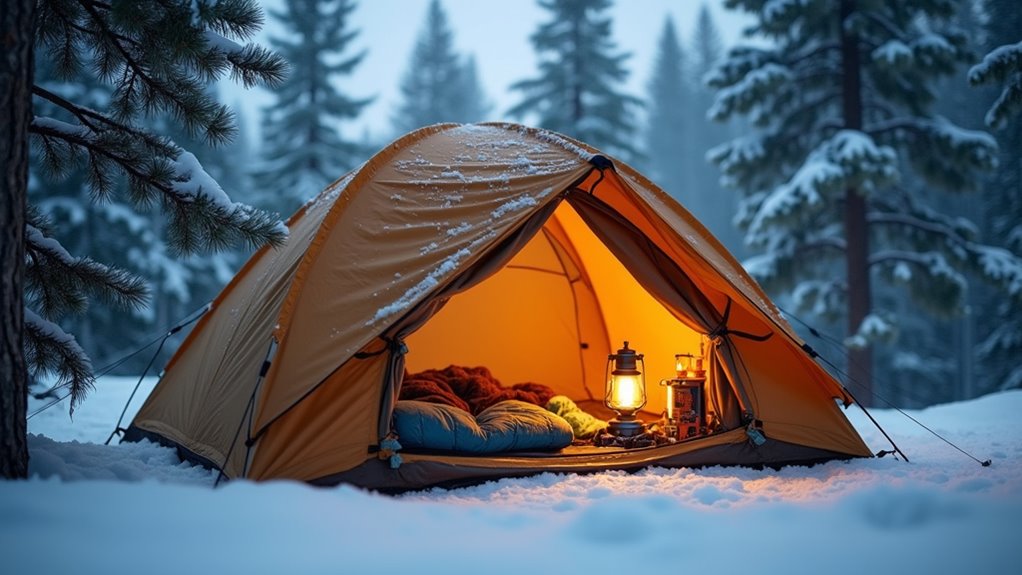
Winter camping needs the right tent for warmth and safety. Pick tents made of strong materials like ripstop nylon or heavy fabric. These stop tears from snow and wind.
Dome or tunnel shapes hold up well against storms. Use tents with metal or DAC aluminum poles for strong support. Additionally, four-season tents are specifically designed to withstand harsh winter conditions.
Double-wall tents with tight seams and tough zippers keep out cold air and moisture. A tarp-like rainfly helps snow slide off easily.
Color-coded poles make setup fast, even in the dark. Tie down your tent with many guy lines to fight strong winds.
Choose tents with extra vestibules to store wet clothes. This keeps your sleeping area dry and cozy. Additionally, consider tents with reinforced seams to prevent dampness from entering and enhance overall insulation.
Ground and Floor Insulation
Staying warm in a winter tent depends a lot on good ground and floor insulation. A tent footprint protects you from cold and wet ground. It blocks cold and moisture well.
Try these insulation ideas:
- Foam pads keep heat in with strong insulation.
- Foil or Mylar blankets bounce your body heat back.
- Thick blankets or rugs add extra warmth.
- Foam tiles cushion your feet and are easy to set up.
- Layer these materials for the best warmth.
Good insulation can raise your tent floor temperature by 10-15°F, making it crucial for enhancing comfort in cold weather. That keeps you much warmer and more comfortable. Proper ground cover is essential for enhancing comfort and protection against the elements.
Warm floors mean better sleep and less cold inside your tent.
Wall and Roof Insulation
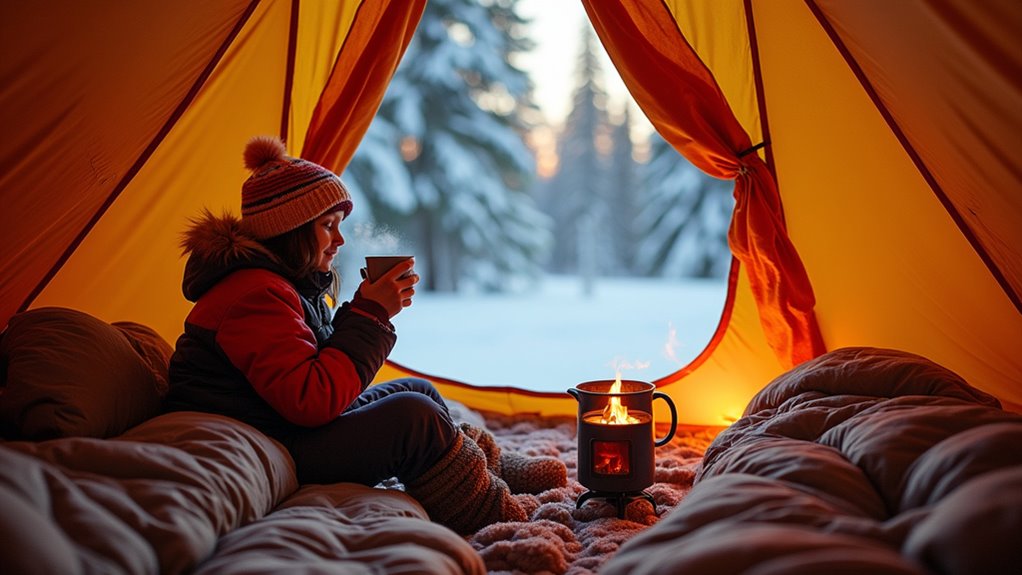
Good ground and floor insulation keeps your tent warm. Wall and roof insulation help hold heat inside. Use synthetic insulated panels with an R-value near 3.2. They keep heat even when wet. Mylar blankets reflect heat back inside when placed on walls and ceilings.
Mount panels with hooks and cords on the ceiling track. This lets the panels fold with the tent. Velcro at the bottom stops cold air from coming in. Clip or sew thermal blankets or foil sheets to the roof after setting up. Layer different materials for better warmth. Utilizing reflective emergency blankets on the walls can significantly enhance heat retention. Mesh pockets on panels add storage without losing heat. Insulating walls and roof cuts heat loss, which is crucial for winter camping to stay cozy and warm.
Your winter camping stays cozy and warm.
Wind Protection
Winter winds can be harsh. Protecting your tent helps you stay warm and safe. Strong tents resist wind better. Pick tents with steel frames for extra strength. Additionally, investing in a tent with a waterproof fly can further enhance your protection against the elements.
Aerodynamic shapes cut wind force. Vented tops reduce pressure inside. Heavy-duty stakes hold tents firmly. Drive stakes at a 45-degree angle for best grip.
Ratchet straps and guy lines spread wind stress. Check and tighten all anchors often. These steps keep your tent steady in strong winds. Additionally, ensure proper ventilation needs to prevent carbon monoxide buildup when using heaters inside the tent.
Stay safe, enjoy your camping trip.
Interior Warmth Strategies
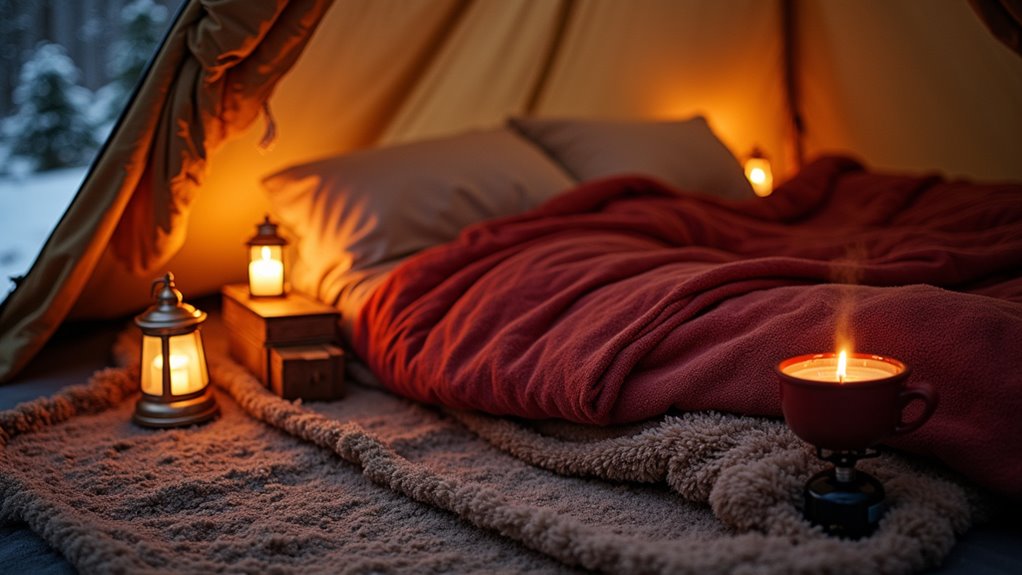
Keeping your tent warm during winter camping makes your trip much better.
Use space blankets on tent walls. Tape them with duct tape to stop cold air from coming in. Additionally, proper tent positioning can enhance comfort by blocking cold winds.
Sleep on thick pads with a high R-value, like R 4 or 5. Add a sleeping bag liner to stay warmer.
Hot water bottles can warm your sleeping bag for hours.
Keep some airflow in the tent to stop wet air and frost.
Additionally, using reflective emergency blankets can enhance heat retention and further improve your comfort.
These simple steps keep you cozy and dry inside your tent.
Frequently Asked Questions
What Should I Wear to Stay Warm While Sleeping in a Tent?
Stay warm in a tent by wearing thermal clothes that pull moisture away from your skin. Use a sleeping bag that fits you well to keep heat close. Add accessories like a hood or draft collar to block cold air. Your body heat stays inside, making you cozy all night. Layers trap warmth better than one thick piece. Also, wear a hat and socks to protect extremities. Cold air sneaks in through gaps, so seal your sleeping area tightly. These simple steps help keep you warm and comfortable outdoors.
How Can I Prevent Moisture Buildup Inside My Tent?
Keep your tent dry by using good airflow. Open vents and doors to let air move freely. Use a groundsheet or tarp under the tent to block moisture from the ground. Avoid cooking or drying wet clothes inside the tent. Warm air holds more moisture, so keep your tent warm but ventilated. This stops water from settling on walls. These simple steps reduce dampness and make your tent comfy and dry.
Is a Sleeping Bag Liner Worth Using for Extra Warmth?
A sleeping bag liner adds extra warmth and comfort. It helps keep heat inside, especially liners made from fleece or thermal fabric. This means your sleeping bag works better in cold weather. Liners also keep your sleeping bag clean and dry. They are lightweight and easy to pack. Many campers say liners make a big difference on chilly nights. Using one can make your outdoor sleep much warmer and more pleasant.
Can I Use a Portable Heater Inside My Tent Safely?
Using a portable heater inside your tent can be safe with the right steps. Pick electric heaters or those with built-in safety features. Keep your tent well-ventilated to avoid dangerous gases. Never leave the heater on when you sleep or leave the tent. Many accidents happen because of poor ventilation or careless use. Follow these rules to stay warm and safe on your trip.
What Food and Drinks Help Maintain Body Heat in Winter Camping?
Warm drinks like herbal tea and hot chocolate raise your body temperature quickly. Foods rich in calories, such as trail mix and nut butters, give your body the energy it needs to stay warm. Eating fats and proteins helps your body produce heat faster. Drinking water keeps you hydrated, which is important because cold weather can dry you out. Small, frequent snacks keep your energy steady throughout the day. Warm food and drinks work together to keep you comfortable in the cold.
Conclusion
Stay warm in a winter tent by blocking cold air and trapping heat. Pick a tent made for cold weather. Use a thick ground pad to stop cold from the earth. Cover the tent walls with an extra layer, like a blanket or tarp. Set up windbreaks nearby to shield from strong winds. Sleep in bags made for very low temperatures. A small, safe heater helps add extra warmth. These steps turn your tent into a cozy place. Enjoy winter camping nights, warm and comfortable.