
How To Waterproof A Canvas Tent
This post contains affiliate links. As an Amazon Associate, we earn from qualifying purchases.
To waterproof your canvas tent effectively, clean it thoroughly and apply a waterproof treatment such as a DWR spray or wax-based product. This process, including fabric seasoning and regular maintenance, will help keep your tent water-resistant and durable. Further details and step-by-step instructions are provided below for those who want to ensure maximum protection against dampness.
Essential Facts in 30 Seconds
- Wet the canvas and let it dry to shrink fibers and enhance waterproofing.
- Ensure the tent is fully dry before applying waterproof treatment evenly.
- Repair holes and seams prior to waterproofing to prevent leaks.
- Store the tent dry in a cool, ventilated area to avoid mold.
- Reapply waterproof treatments yearly or as needed based on use and weather.
Understanding Waterproofing Types for Canvas Tents

Waterproofing your canvas tent protects it from rain and moisture. Three main types exist: waterproof, water-resistant, and water-repellent.
Waterproof coatings, like polyurethane, block all water but can trap dampness inside the tent. Water-resistant treatments stop some water but allow a little to pass through. Water-repellent options make water bead and roll off, but you must apply them often. Regularly applying waterproofing treatments is vital for maintaining your tent’s effectiveness.
Wax treatments last long but reduce breathability, best for natural fiber canvas. Durable Water Repellent (DWR) sprays keep the fabric breathable and resist water well. Regular maintenance ensures tent integrity and enhances your overall camping experience. Clean and dry your canvas before applying any treatment. Regular care and reapplication keep the tent dry and extend its life. Protect your tent well to enjoy dry, comfortable camping every time.
Seasoning or Weathering the Canvas
Seasoning your canvas tent improves its waterproof ability. Wet the canvas to make fibers shrink. This tightens the fabric and stops water from seeping in. Additionally, re-waterproofing your tent ensures long-lasting protection against moisture.
Set up your tent tightly in a dry, shaded place. Spray the whole surface with water. Let the tent dry fully while still set up. This drying shrinks the fibers and locks in waterproof coatings.
Repeat wetting and drying for better results. This process doesn’t block air flow but makes the fabric stronger. Skipping this step can cause weak spots and faster damage.
Proper seasoning helps your tent resist rain and last longer on trips. Additionally, regular maintenance, including waterproofing sprays, can further enhance your tent’s performance against moisture.
Cleaning and Preparing the Tent Before Waterproofing
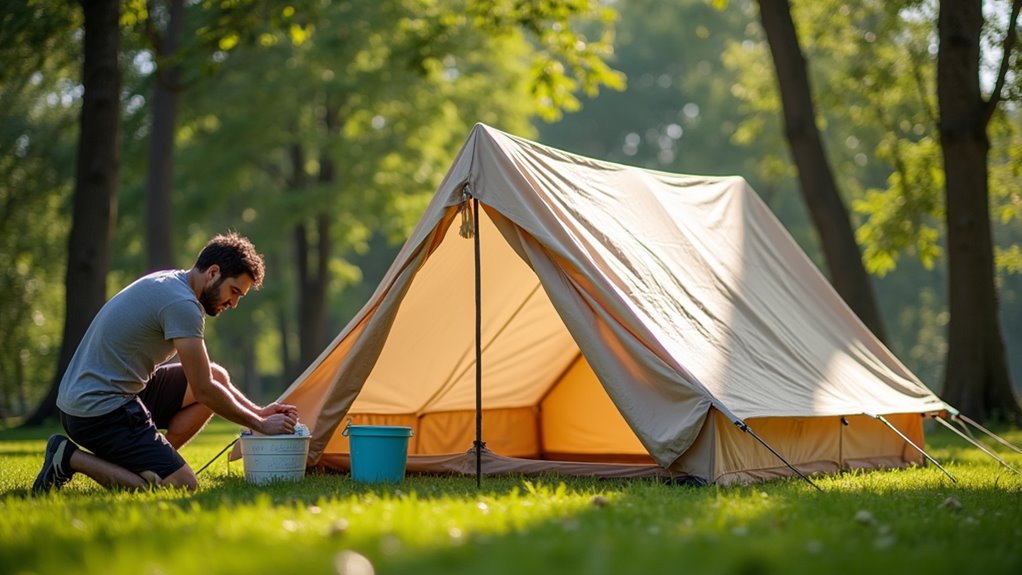
Clean and prepare your canvas tent before applying any waterproof treatment.
Lay the tent flat on a clean drop cloth to keep dirt away. Rinse the canvas with warm water to wash off loose dirt. Use a mild soap mixed with water to scrub stains gently. A soft brush or sponge works best. Avoid harsh detergents—they can harm the fabric. It’s crucial to remove all gear and shake out loose dirt and debris before starting the cleaning process.
Check for old waterproof coating. If it flakes or peels, remove it carefully with rubbing alcohol. Let the tent dry fully in a well-ventilated space to prevent further mildew growth. This stops mold from growing.
Finally, inspect seams and fabric for damage. Look for signs of deterioration such as tears or holes that may need patching. Write down any spots that need repair. These steps keep your tent strong and ready for waterproofing.
Applying Waterproof Treatments
Select the right waterproof treatment for your canvas tent.
Wax-based products repel water well.
Modern sprays protect while keeping fabric breathable.
Apply the treatment by spraying or brushing.
Spread it evenly for the best protection.
Proper application helps your tent stay dry longer. Additionally, ensure that your tent is completely dry before applying any waterproof treatment to maximize effectiveness.
Suitable Waterproofing Products
Waterproof your canvas tent with the right products for strong, lasting protection. Use these water repellent options and check if they suit your fabric:
| Product Type | Key Features | Usage Tips |
|---|---|---|
| PFAS-Free Water Repellent | Protects from UV, no residue, covers 150 sq. ft. | Works well on many fabrics, including canvas |
| Traditional Wax Treatments | Very durable, may lower breathability | Needs heating; good for old tents |
| Commercial Waterproofing Sprays | Easy to apply, needs several coats | Use on clean, dry fabric |
| Silicone-Based Sprays | Not great for breathability | Can darken fabric temporarily |
Using the right product keeps your tent dry and strong for many trips. Remember to conduct periodic waterproofing treatments to extend your tent’s lifespan. Pick what fits your needs best.
Application Methods Explained
Waterproof treatments keep your canvas tent strong and dry for years.
Clean the fabric well using water and mild soap. Let it dry completely before starting.
Spray treatments cover seams evenly and fast. Use a brush or roller to apply thick solutions with care.
Wax treatments need rubbing by hand into the fabric. Apply thin coats to avoid drips and keep the tent breathable. Wipe off extra treatment right away with a damp cloth.
Using the right tools and methods boosts your tent’s water resistance and durability. Simple steps like these make your outdoor gear last longer and work better.
Traditional and Modern Waterproofing Materials
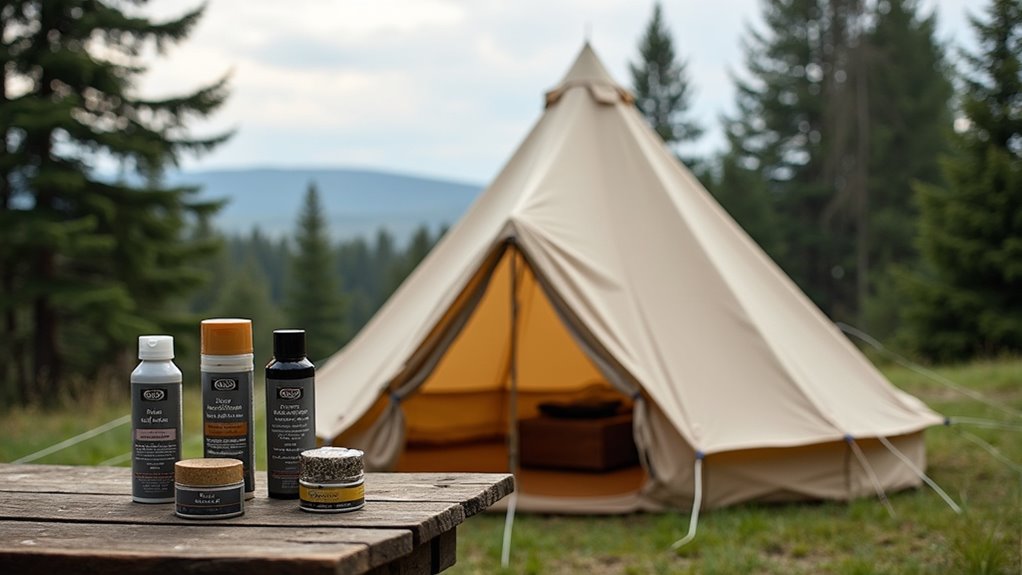
Traditional and modern waterproofing materials have different features and benefits. Traditional materials like untreated cotton canvas use a tight weave. This weave swells when wet, blocking water from passing through. People often add oil or paraffin wax to improve water resistance. These coatings may make the fabric less breathable. Additionally, a rain fly can further enhance a tent’s protection against moisture.
Modern materials include polycotton blends and silicone-based coatings such as Kodiak’s Hydra-Shield. These options provide strong water protection and last longer. They also let air pass through, keeping tents comfortable. Additionally, checking for waterproof coatings on your tent fabric can enhance its overall effectiveness against water ingress.
Synthetic materials like polyethylene are fully waterproof but don’t allow air to flow. Coatings that protect against UV rays help materials last longer. Knowing these differences helps you pick the best waterproof method for your canvas tent. This choice keeps you dry and comfortable while camping.
Maintenance and Reapplication
Keep your canvas tent strong by checking it often.
Look for holes, tears, or weak spots.
Add waterproof spray after every camping trip or heavy rain.
Let the tent dry fully before folding it.
Store it in a dry place to stop mold.
Doing this helps your tent last many years.
Regular Inspection Schedule
Regular inspections keep your canvas tent waterproof and strong. Check it every 3 to 6 months.
Use more often? Check more often. Store it in damp places? Check more often.
Look at seams for cracks. Feel the fabric for weak spots. Check the floor for holes or tears.
Mold and mildew can grow in damp storage. Check for those carefully.
After storms or long use, inspect the tent well. Write down inspection dates and what you find.
This helps catch problems early. Keep your tent safe and lasting longer.
Reapplication Frequency Guidelines
Keep your canvas tent waterproof to enjoy dry camping. Reapply waterproof treatments once a year. Use more often if you camp a lot or face harsh weather.
Check for wet spots or puddles inside the tent. Apply new waterproof coating right away if you see any. Heavy rain seasons need extra care; reapply before they start.
Clean the tent well before adding waterproof spray or paint. Focus on seams; water leaks there first. Use products made for canvas fabric.
Follow these steps to keep your tent safe from water damage.
Proper Storage Techniques
Verify your canvas tent is fully waterproofed before storing.
Store the tent in a cool, dry place to stop dampness. Keep it away from direct sunlight. Sunlight can cause UV damage.
Use a breathable storage bag, not plastic. This helps moisture escape.
Make sure the tent is completely dry before folding it. Fold the tent neatly to avoid creases. Store it loosely to allow air flow.
Check the tent often for mold or bad smells. Clean the tent if you find any.
These steps help your tent last longer and stay waterproof.
Frequently Asked Questions
Can I Waterproof a Tent That Is Already Wet?
Waterproofing a wet tent does not work well. The waterproof coating needs a dry surface to stick properly. First, dry your tent completely under the sun or in a dry place. This helps the waterproof layer last longer and keeps water out better. Damp fabric stops the waterproof spray from working right. Dry tents stay safe and strong against rain. Keep your tent dry before applying any waterproof treatment for the best results.
How Do I Know if My Tent Needs Waterproofing?
Water beads up on a well-waterproofed tent. Water soaking into the fabric means it needs treatment. Damp spots inside your tent show leaks. Regularly check your tent for these signs. Proper care keeps its waterproof layer strong. Waterproof sprays can restore protection. Don’t wait for heavy rain to test your tent. A dry tent means a happy camping trip.
What Is the Best Time of Year to Waterproof My Tent?
Spring and early fall work best to waterproof your tent. The weather stays dry and mild. This helps the waterproof coating to dry well. Wet, cold days can cause mold or mildew. Waterproof your tent before camping season starts or ends. Regular care keeps your tent strong and dry. A well-treated tent lasts longer and protects you better.
Can I Use Regular Spray-On Waterproofing on Canvas Tents?
Regular spray-on waterproofing works well on canvas tents. Check the product label to ensure it suits canvas fabric. Clean the tent thoroughly before applying spray. Let the tent dry completely to help the waterproofing stick better. This care helps the spray last longer and keeps the tent dry in rain. Using the right spray and proper steps protects your tent and saves money.
How Long Does Waterproofing Treatment Last on Canvas Tents?
Waterproofing treatment on canvas tents usually lasts about one year. Rain, sun, and rough weather can make it wear out faster. Good waterproofing keeps water out and stops mold from growing. Cleaning your tent and applying waterproof spray often helps it last longer. Check your tent before trips to stay dry and safe.
Conclusion
Waterproofing your canvas tent keeps you dry and comfortable outdoors. A family camping in the Pacific Northwest used silicone spray and wax treatments. Their tent stayed dry through a week of heavy rain. You must maintain and reapply waterproof coatings regularly. This care extends your tent’s protection for many trips. Follow these steps to face rain and wind confidently. Your camping stays fun, no matter the weather.
