
How To Wash A Tent
This post contains affiliate links. As an Amazon Associate, we earn from qualifying purchases.
To wash your tent effectively, use a mild soap such as fragrance-free dish detergent or a specialized tent cleaner, along with lukewarm water and a soft sponge. Set up the tent to locate dirty spots, shake out loose dirt, then gently clean and rinse it thoroughly. After washing, dry the tent in a shaded area, turning it inside out halfway through, and store it in a cool, dry place inside a breathable bag. Further details and helpful maintenance tips will be provided later in this article.
Essential Facts in 30 Seconds
- Use mild, fragrance-free dish soap with lukewarm or cold water to protect the tent’s waterproof coating.
- Set up the tent to spot clean dirty areas with a soft sponge and soap solution.
- For full washing, submerge the tent in cool water and rinse thoroughly.
- Dry the tent in a shaded, well-ventilated area, turning it inside out halfway through.
- Store the tent in a cool, dry place using breathable bags to prevent damage.
Tent Washing Preparation
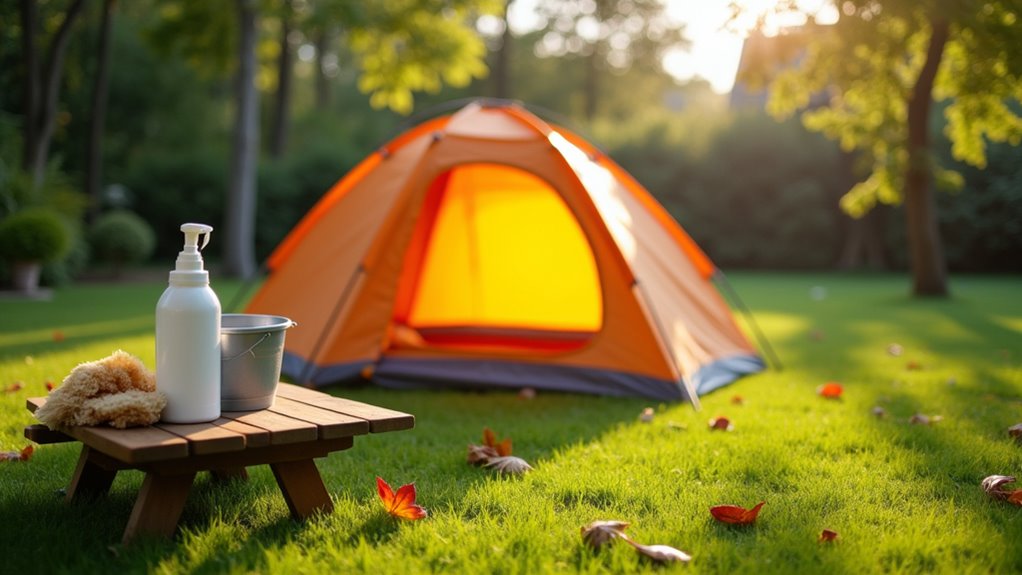
Prepare your tent for washing carefully to keep it safe and clean. Use mild, fragrance-free dish soap or special tent cleaner. Hot water can damage the tent’s waterproof coating, so choose lukewarm or cold water.
Pick soft sponges, soft-bristle brushes, or cloths to clean gently and avoid scratches.
Find a large tub or bathtub to soak your tent. A garden hose works well for rinsing if a tub isn’t available. Unzip all doors and windows fully.
Turn the tent inside out to clean the dirtiest parts without hurting the outside layer. Shake out dirt and leaves before washing.
Check the tent for tears or holes. Fix any damage before washing to stop it from getting worse. Additionally, ensure you remove all gear from the tent before cleaning to prevent any obstructions during the washing process.
Spot Cleaning Techniques
Set up your tent so you can see all dirty spots clearly. Remove loose dirt and pine needles first. This helps find stains fast.
Mix mild dish soap with water for cleaning. Use a soft sponge or cloth to wipe gently. Avoid scrubbing hard to protect the fabric. Regular cleaning with mild soap or white vinegar can effectively remove mold.
Mineral oil or alcohol-based hand sanitizer works well on pine sap. Test these on a hidden spot before using.
For organic stains, blot with a damp cloth first, then apply soap solution. Never use bleach; it can ruin your tent’s material.
Let cleaned areas dry fully to stop mold and mildew. Regular cleaning maintains tent longevity and performance, ensuring your tent remains in top shape.
Clean spots regularly to keep your tent strong and lasting longer. This simple care saves money and trouble on trips.
Full Tent Washing Process
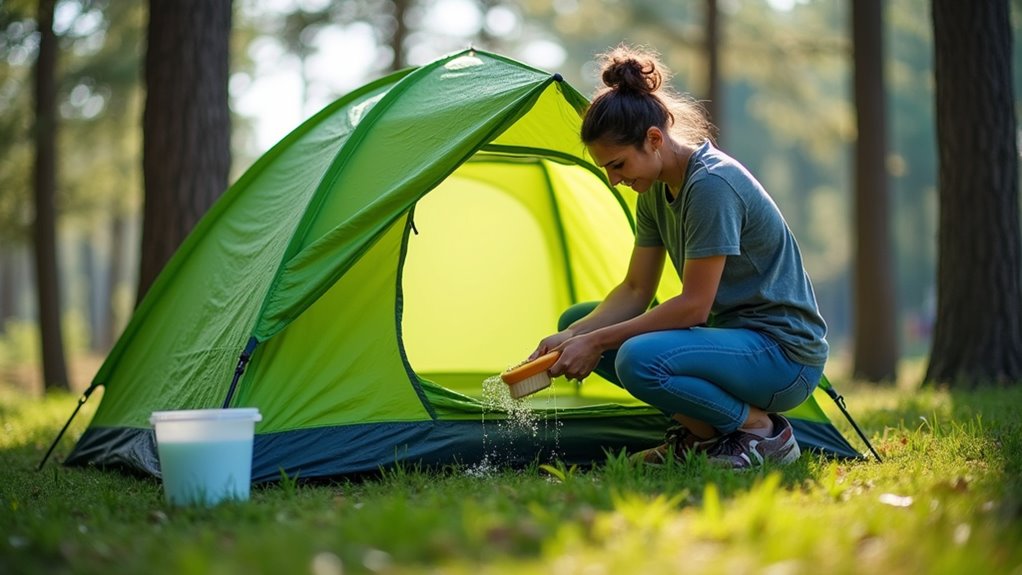
Start by shaking out all dirt and closing every zipper on your tent.
Use a large tub or container and fill it two-thirds full with cool or lukewarm water. Pick a mild, neutral soap like Nikwax Tech Wash or Dr. Bronner’s Castile soap. Avoid harsh detergents that can damage waterproof layers.
Submerge your tent and rainfly fully. Gently move the water to loosen dirt. Let the tent soak as the soap instructions say.
Drain the dirty water, then refill the tub with clean water. Swirl and move the tent to rinse away soap. Repeat rinsing two or three times until the water looks clear.
Clean the seams carefully to stop soap buildup. This method keeps your tent strong and lasts longer. Additionally, ensure the tent is completely dry before folding it up to prevent future mustiness.
Drying and Post-Wash Care
Dry your tent well after washing to keep it strong and last longer. Pick a shaded spot with good air flow. Stay away from direct sunlight because it can damage the fabric. Hang your tent loosely to let air move around. Turn it inside out halfway through drying. Use big mops to soak up extra water fast. Don’t put your tent in the dryer; it can ruin the waterproof coating.
After drying, check your tent carefully. Look at the seams for cracks or peeling tape. Add seam sealer if needed. Check the fly and floor for worn spots. These might need a new coating or patch. Remember, preventing mold and mildew growth is crucial for maintaining your tent’s integrity. Additionally, ensure you choose a shaded area for drying to maximize effectiveness.
Clean off any leftover dirt gently before storing. Make sure your tent is fully dry to stop mold and keep water out. Dry it for at least 24 hours for the best result.
Tent Storage and Maintenance After Washing
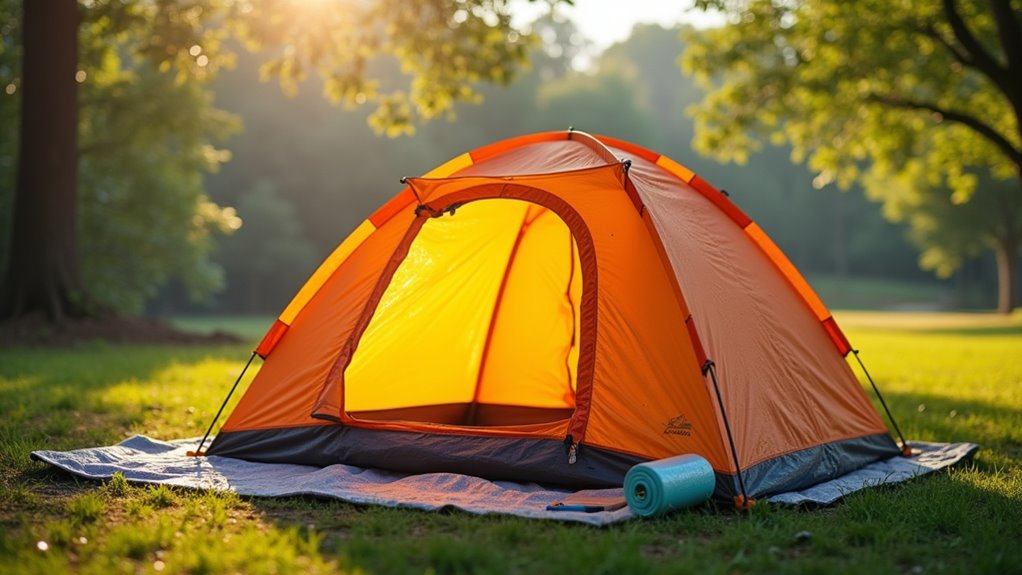
After washing your tent, dry it completely. Damp tents cause mildew and damage. Proper maintenance, including addressing leaks, is crucial to ensure your tent remains in good condition.
Store the tent in a cool, dry place away from sunlight. Sunlight breaks down fabric over time. Avoid basements and car trunks due to moisture and temperature changes. Use breathable bags, not tight compression sacks. Air flow keeps the tent fresh.
Open the tent doors sometimes to air it out. Check the tent for mold or tears. Fix problems quickly to stop damage. Keep small parts separate to protect them.
Don’t fold or roll the tent too tightly. Loose folding helps the fabric last longer. Following these steps will help you maintain tent storage and keep your tent strong and ready for your next trip.
Frequently Asked Questions
Can I Use Bleach to Clean My Tent?
Bleach damages tent fabric and removes waterproof coating. This makes your tent less strong and lets water in. Use gentle cleaners made for tents instead. These keep the fabric safe and clean. Your tent will last longer and stay dry. Avoid harsh chemicals to protect your gear. Easy care means more fun camping trips.
How Often Should I Wash My Tent?
Wash your tent at least once each season. Dirt and use can make it dirty faster. Clean tents last longer and stay strong. Check your tent after every trip. Remove mud, leaves, and bugs quickly. Use mild soap and water for washing. Avoid harsh chemicals that damage fabric. Let your tent dry fully before packing. Store it in a cool, dry place. Keeping your tent clean protects it from damage and mold. Regular care saves money and keeps adventures safe.
Is It Safe to Machine Wash Tent Poles?
Machine washing tent poles can ruin them quickly. Tent poles are usually thin metal or fiberglass. These materials can bend, break, or lose their coating in a washing machine. Washing machines bounce poles around hard. This can cause dents and cracks. It can also damage tent fabric if poles are inside. Use a soft cloth with soapy water to clean poles. Wipe gently to remove dirt and bugs. Let poles dry completely before storing. Proper care keeps poles strong and ready for your next trip. Treat them like tools, not clothes.
Can I Clean My Tent in the Rain?
Cleaning your tent in the rain is not a good idea. Wet tents hold moisture inside. This causes mildew to grow and can ruin the tent’s waterproof coating. Dry weather helps clean your tent properly. Dry conditions keep the tent fresh and long-lasting. Always wait for a sunny day before cleaning your tent. This keeps your gear safe and ready for your next trip.
What Should I Do if My Tent Smells Musty?
A musty smell in your tent means it needs fresh air and cleaning. Take the tent outside and open all windows and doors. Let it dry fully in sunlight for at least a few hours. Use a soft cloth and mild soap to gently clean the fabric. Special tent cleaners work well for tough odors. Never pack a wet tent; moisture causes mildew and bad smells. Store your tent in a cool, dry place. Regularly airing and cleaning your tent keeps it fresh and ready for your next trip. A dry tent lasts longer and smells better.
Conclusion
Washing your tent often helps it last longer and stay waterproof. Dirt and mold can damage the fabric and seams. Use soft brushes and mild soap to clean gently. Rinse well to remove all soap. Let the tent dry fully in the sun or a dry place. Store it in a cool, dry spot to avoid mold and mildew. Check your tent for tears or holes before each trip. Fix small problems quickly to avoid bigger damage. Clean tents give you a more comfortable camping experience. Taking care of your tent protects your gear and saves money over time. Simple care keeps your tent ready for every adventure.
