
What Is A Wall Tent
This post contains affiliate links. As an Amazon Associate, we earn from qualifying purchases.
A wall tent is a spacious, rectangle-shaped canvas shelter with vertical sidewalls, designed to provide comfort and durability for camping or hunting. Made from materials like army duck canvas or polyester blends, it offers breathability and water resistance. Sizes vary from 8×10 feet for small groups to 16×20 feet accommodating up to 16 people. Easy to set up, wall tents serve as versatile bases for outdoor activities. Further details on their features and benefits will be explored later in the article.
Essential Facts in 30 Seconds
- Wall tents have straight, vertical walls for more headroom and space.
- Originally military shelters, now used for recreational camping.
- Made from durable, water-resistant, breathable fabrics like canvas or polyester.
- Sizes vary from 8×10 feet to 16×20 feet for different group sizes.
- Used as base camps or communal event spaces with easy setup.
Definition and Structure of Wall Tents
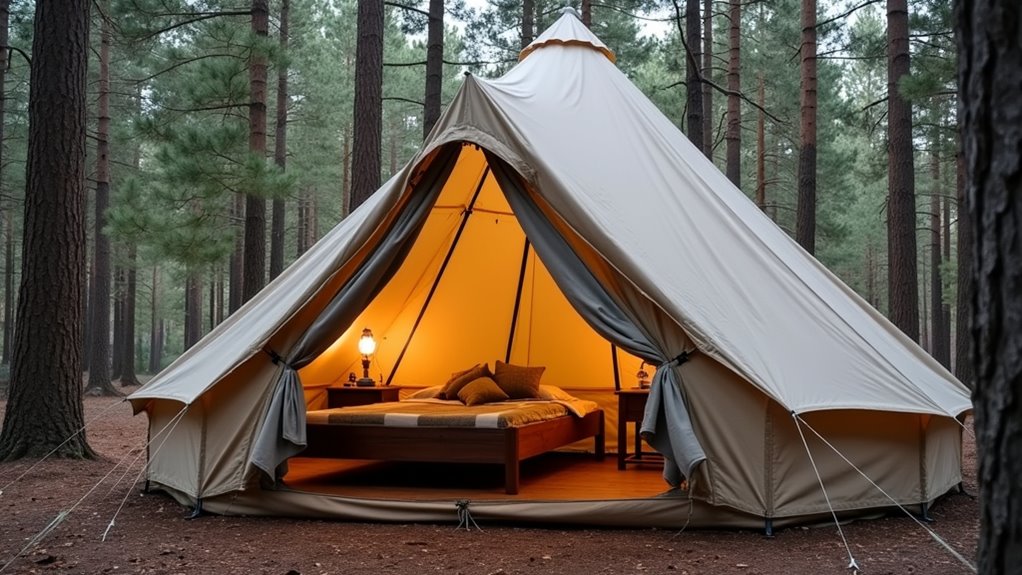
A wall tent has four straight, vertical walls. This shape gives you more headroom and space inside than regular tents. It makes the tent roomy and comfortable for hunting, camping, or glamping trips.
The frame can be inside or outside the tent. Strong frames hold up the heavy canvas well. Good frames keep the tent steady and safe in bad weather. You must tie down and stake the tent tightly to stop it from blowing away.
Setting up a wall tent needs two or three people because it’s big and a bit tricky. Some tents have floors sewn in. This can make setup harder but adds comfort.
Wall tents last through all seasons. They fit several people and a lot of gear. Perfect for anyone who spends time outdoors.
Materials and Fabric Types Used
Materials and fabric types shape the quality of wall tents. Army duck canvas is a popular choice. This cotton fabric is thick, strong, and breathes well. It soaks up water but can be treated to resist moisture and last longer.
Polyester canvas mixes cotton with synthetic fibers. This blend is lighter and more tear-resistant. It absorbs less water and dries quickly, making it good for wet weather. Coatings like PVC or polyurethane add extra water protection and block sunlight.
Ripstop nylon and Dyneema are very light and strong fabrics. They cost more but offer great strength for weight. Knowing these fabrics helps you pick a durable, water-resistant, and lightweight wall tent for your needs.
Historical Usage and Evolution
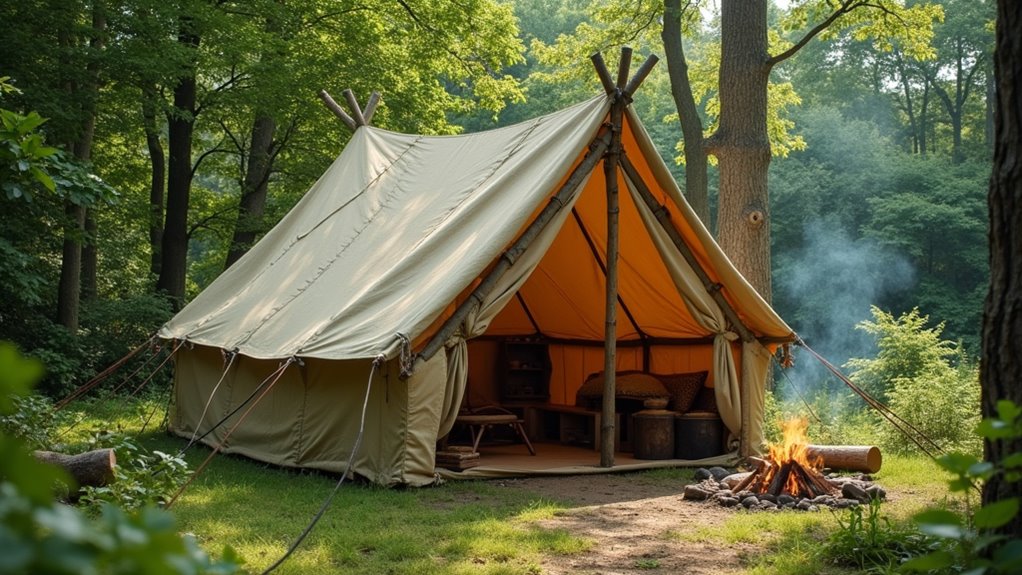
Wall tents began as military shelters, built to be strong and easy to move. Soldiers used them during wars because they kept them safe and dry. These tents worked well in many places.
Over time, people started using wall tents for fun, like camping and hunting. Today, wall tents come in many sizes and styles. Families use them for camping trips. Hunters like them for long stays outdoors.
Their simple design and tough fabric make them very popular. Wall tents show how useful and lasting they are.
Military Origins and Adoption
Military tents played a big role in armies for a long time. Ancient Egyptians and Romans used animal skins to make tents. Roman soldiers lived in groups called *contubernium* to stay organized.
Bigger tents acted as command centers. By the 1700s, cotton canvas became popular because it kept soldiers dry. Wall tents appeared in the 1500s. These tents had tall walls and space for many people and supplies.
Strong and easy to move, wall tents helped armies during long battles. Over time, tents changed to fit the needs of war better.
Modern Recreational Uses
Wall tents grew from simple shelters into popular camping gear. They fit many needs. Families love their large space and comfort. Campers find them easy to set up and strong against weather. Durable construction ensures these tents withstand the elements for years to come. Outdoor festivals use wall tents as fun gathering spots. Climbers use them as base camps for mountain trips. New materials make these tents tough and quick to pitch. Wall tents bring comfort and adventure together. A quality tent can significantly enhance your outdoor experience. Try one and enjoy your time outside more.
Sizes and Capacity Options
Size and capacity matter a lot for wall tents.
Common sizes start at 8×10 feet, fitting 3 to 4 people. Bigger tents, like 16×20 feet, can hold up to 16 people comfortably. A larger wall tent can provide extra space for activities or gear, ensuring that everyone has room to move around comfortably.
Pick a size that matches your group and the gear you need inside. Space for sleeping and storage makes camping easier and more fun. Additionally, tent size requirements should be considered to ensure optimal comfort for all occupants.
Common Size Options
Wall tents come in many sizes. Small tents measure about 8×10 feet. Large ones can reach 16×24 feet. Common sizes are 8×10, 10×12, 12×14, 14×16, and 16×20 feet. Some brands also offer 9×9 or custom sizes.
Medium to large tents often range from 10×13 to 13×20 feet. Sidewalls usually stand 4 to 6 feet tall. Peaks can be 7 to 9 feet high. Bigger tents fit stoves, furniture, and more gear.
Picking the right size boosts comfort and usability outdoors.
Capacity for Groups
The right wall tent size makes group camping comfortable. Small groups or families fit well in an 8′ x 10′ tent. It sleeps 3 to 4 people.
Medium groups find a 10′ x 12′ tent ideal. It holds 5 to 6 people.
Big groups need bigger tents like 12′ x 14′ for 7 to 8 people. Even larger groups choose 14′ x 16′ tents. They fit 9 to 11 people.
The largest size, 16′ x 20′, holds 12 to 16 people. Each person needs about 20 to 30 square feet. This space covers sleeping, cooking, and social time.
Think about your group size, trip length, and gear. This way, everyone stays comfortable and has enough room.
Setup and Practical Considerations
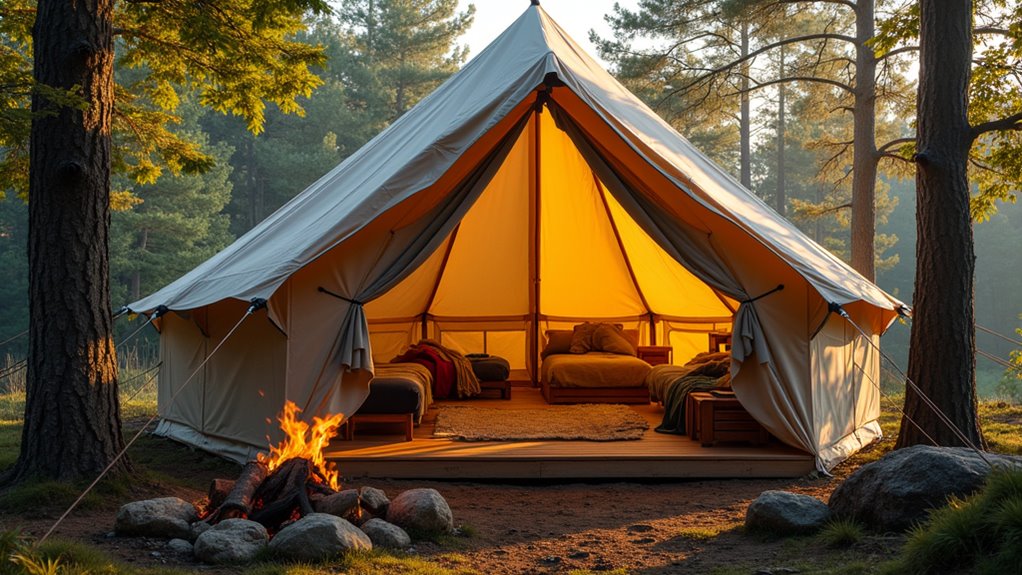
Prepare well before setting up your wall tent. Lay out all parts clearly for easy reach. Unroll the canvas on a clean tarp to keep it safe. Proper setup is crucial to prevent damage and ensure longevity.
Sort frame pieces by type and mark joints with colored tape. Assemble the roof first by connecting angled poles for strength. Place the canvas over the frame and check the fit.
Attach the tent walls and tighten stakes slowly to keep tension. Use heavy-duty stakes at hold-down points and smaller ones for wall support. Make sure poles line up straight for a firm structure. Remember to stake down the tent at a 45-degree angle for stability to ensure a strong setup.
Put a ground cloth or tarp under the floor to block dampness and bugs. These steps help your wall tent stay strong and last longer.
Applications and Advantages of Wall Tents
Wall tents offer many uses and benefits for outdoor activities. Hunters use them as warm, comfortable base camps during long trips. Their strong canvas holds up well in bad weather. Wall tents are also a great example of a promotional tool that can enhance customer engagement in outdoor events.
These tents work great for winter camping, especially with a wood stove inside. Wall tents fit many events. They make good booths at fairs or show spaces at conventions. Their large size lets you cook, sell goods, or host guests easily. The tents add a rustic charm to weddings and outdoor parties.
Setting up and taking down wall tents is simple and quick. You can add heating and vents for comfort in any season. Additionally, wall tents provide ample space for sleeping arrangements and communal activities, making them a versatile choice for group camping trips. Enjoy outdoor spaces all year with these tents. Wall tents combine comfort and usefulness in one package.
Frequently Asked Questions
How Much Do Wall Tents Typically Cost?
Wall tents usually cost between $700 and $3,000. Brands like Kodiak offer tents at lower prices. White Duck makes luxury tents with strong materials and extra comfort. Prices change based on size, fabric, and features. Durable tents last longer but cost more. Simple tents save money but may wear out faster. Many buyers spend around $1,500 for a good balance of price and quality.
What Accessories Are Recommended for Wall Tents?
Nearly 70% of campers buy tent heaters to stay warm. Wall tents work great with wood-burning stoves. Outdoor mats make floors stronger and keep cold out. These accessories make camping more comfy and warm. They help you enjoy your trip no matter the weather.
Can Wall Tents Be Used in Winter Conditions?
Wall tents work well in winter. They use heavy canvas that keeps cold out. Stove jacks let you add a small stove inside. This stove warms the tent fast. The strong frame holds up against snow and wind. Many campers trust wall tents for cold weather. They stay warm and dry, even in storms. Winter camping feels safer and more comfortable here.
How Do I Clean and Maintain a Wall Tent?
Your wall tent needs care to last long. Brush off dirt often to keep it clean. Use mild soap and water for washing. Avoid harsh chemicals that can damage the fabric. Let the tent dry fully before storing it. Wet tents can grow mold and rot. Check seams and zippers regularly for damage. Fix small tears quickly to stop them from growing. Store the tent in a cool, dry place. Taking these steps keeps your tent strong and ready for your next trip.
Are Wall Tents Easy to Store and Transport?
Wall tents store and transport with ease. Use breathable bags to keep fabric fresh. Hard containers protect from bumps and pests. Sealed boxes or duffel bags work great for travel. Many campers find packing simple and quick. This gear stays safe, ready for your next trip.
Conclusion
Wall tents offer plenty of space and comfort for outdoor activities. They stand tall with straight walls, giving extra room inside. Made from strong materials, they protect well from rain and wind. Setting up a wall tent is simple once you learn the steps. Many campers and hunters trust wall tents for long stays in nature. These tents also work great for outdoor events and gatherings. A good wall tent improves your time outside. Invest in one that fits your needs and enjoy your adventures more.
