
How To Waterproof Your Tent
This post contains affiliate links. As an Amazon Associate, we earn from qualifying purchases.
To waterproof your tent effectively, begin by thoroughly cleaning it with mild soap and warm water, then inspect and seal any damaged seams using specialized products like Seam Grip WP. Next, refresh the urethane coating by removing flakes with rubbing alcohol before applying a new sealant, and use multiple thin coats of waterproofing spray for optimal coverage. Further details and tips will be provided later in this article for those interested in a more comprehensive guide.
Essential Facts in 30 Seconds
- Clean the tent with mild soap and water, then dry it completely in the shade.
- Check and repair seams and zippers before waterproofing.
- Apply seam sealer to stitched areas to block water.
- Use urethane sealant and waterproofing spray in thin, even layers, allowing drying time between coats.
- Perform waterproofing in dry, mild weather between 15 to 25°C (60-77°F).
Cleaning and Preparing Your Tent for Waterproofing
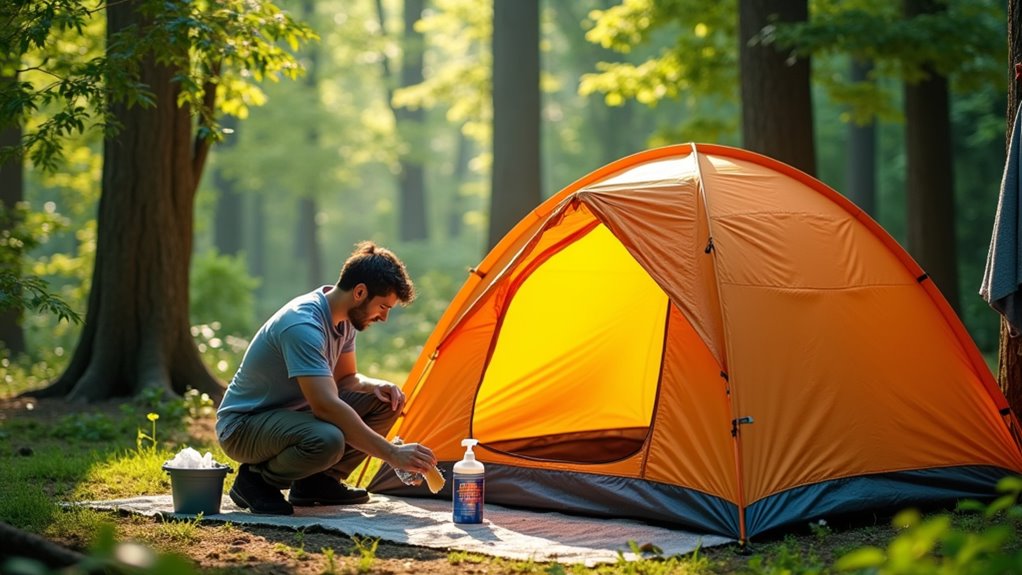
Cleaning and preparing your tent before waterproofing ensures it stays dry and lasts longer.
Pitch your tent in a bright spot to check for damage. Sprinkle water on the fabric. If the water soaks in quickly, the coating needs fixing.
Use mild soap and warm water with a sponge to clean the tent. Avoid strong detergents that can harm the waterproof layer.
Rinse the tent well to remove all soap. Let it dry fully in the shade with good airflow. Make sure both sides are dry before adding any waterproof spray or treatment. Regularly seam sealing your tent can further enhance its waterproofing capabilities.
Check the seams and zippers carefully. Fix any tears or broken parts first. These simple steps help your tent resist rain and keep you comfortable outdoors. Additionally, treating the tent floor is crucial for preventing moisture from the ground.
Seam Sealing for Optimal Protection
Seam sealing keeps your tent waterproof. Stitched seams have tiny holes. Water can leak through these holes. Seam sealing blocks water from entering. It also helps your tent last longer.
Use liquid seam sealer or waterproof tape. Popular brands include Seam Grip WP and Seam Grip SIL. Some prefer industrial adhesives for strong bonds. All these tools create a flexible, water-tight barrier, making waterproofing techniques essential for maintaining your tent’s performance.
Pitch your tent inside out to reach seams. Clean seams with mild soap and water first. Apply the sealer carefully on all stitched areas. Work in a well-ventilated space. Let the sealer dry fully before using the tent.
Check your seams often. Reapply seam sealer when needed. This keeps your tent dry and strong for many trips. Additionally, be aware that water resistance varies among different tents, which may affect the need for seam sealing.
Refreshing Urethane Coating and DWR
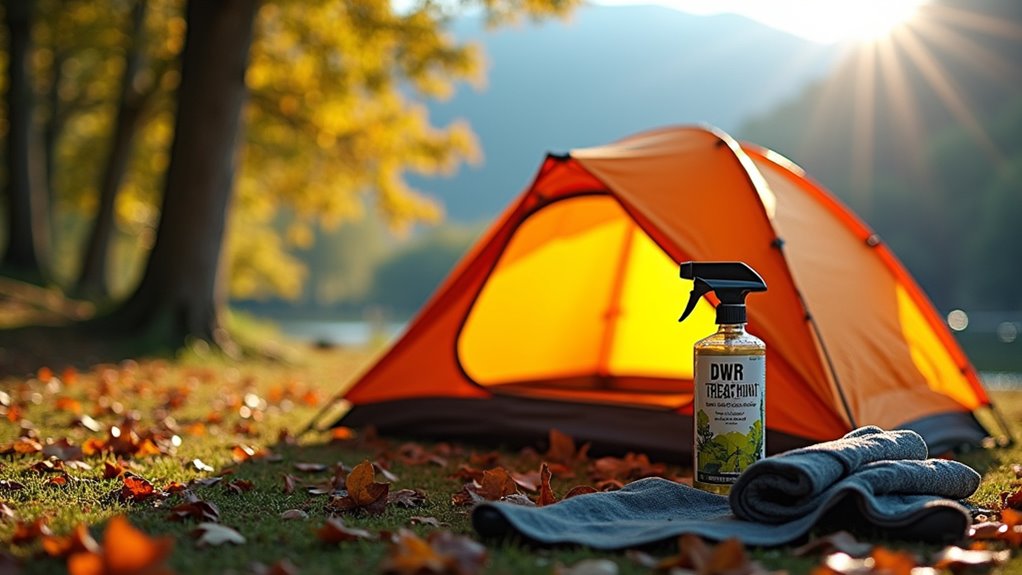
Keep your tent dry by refreshing its urethane coating and Durable Water Repellent (DWR). Check inside your tent for sticky spots or flakes. These signs mean the urethane sealant needs a touch-up. Use rubbing alcohol and a rough sponge to scrub off flakes. Apply a thin, even layer of a tent urethane sealant. Let it dry for at least 24 hours.
Set up your tent outside on a warm, dry day. Spray clean water lightly over the rainfly to wet it. Use a waterproof spray made for your tent fabric. Spray it evenly on the wet rainfly. Wait a few minutes, then wipe off extra spray with a damp cloth. Let the tent dry fully before you pack it. It’s essential to apply seam sealer to any worn areas to ensure maximum waterproofing effectiveness. Regularly check for tears or loose seams to maintain the tent’s integrity and prevent leaks.
Inspect your tent often. Use products made for your tent material. Dry, warm days work best for reapplying coatings. This care keeps your tent waterproof and lasts longer.
Applying Waterproofing Sprays and Liquids
Apply waterproofing sprays or liquids with smooth, overlapping strokes.
Hold the spray 6 to 12 inches from the surface to avoid streaks.
Use several thin coats instead of one thick layer. This method helps the tent stay dry longer and protects the fabric better.
Take your time to cover all areas evenly.
Good technique means better waterproofing and a longer-lasting tent.
Spray Application Techniques
Applying waterproof sprays correctly keeps your tent strong and dry. First, clean the tent fabric well. Let it dry fully in sunlight. Set the tent on a clean, flat surface for spraying.
Use slow, overlapping spray strokes for even coverage. A spray nozzle with a fine mist works best. Lightly wet the fabric with water before spraying. This helps the spray soak in better.
Many believe you must spray only dry fabric. Actually, spraying damp fabric often works fine. After the first coat dries, add a second layer for extra protection. Wipe off any extra spray to stop buildup.
Always follow the product’s instructions. Wear gloves and a mask to stay safe during spraying. Ensure to inspect seams and fabric for any damage before applying the waterproofing spray to enhance effectiveness.
These simple steps keep your tent waterproof and ready for adventure.
Layering for Effectiveness
Use the right waterproofing products for best results. Pick materials that match your tent fabric. Sprays soak in easily. Liquids spread evenly. Clean your tent well before applying anything. This helps the product stick better.
| Layering Technique | Recommended Product | Application Tips |
|---|---|---|
| First Layer | Silicone-based spray | Spray the whole tent evenly |
| Second Layer | Polyurethane liquid | Cover seams and weak spots |
| Seam Treatment | Seam sealer | Apply before waterproofing |
Drying and Curing Time
Knowing how long your tent’s waterproof spray takes to dry is very important. Most sprays dry in 6 to 48 hours. Aim for at least 24 hours to let the coating cure well.
Pick a dry, mild day to spray. This helps the spray dry faster and stops moisture from ruining the coat.
Wait 3 to 4 hours before adding another coat. Keep the tent tight so the spray cures evenly.
Test the waterproofing by dropping water on the tent. If the water beads up, the coating works well.
Follow these simple steps to keep your tent dry and ready for any trip.
Traditional and Alternative Waterproofing Techniques
Many campers use modern synthetic waterproofing, but old and alternative methods also work well.
Linseed oil and beeswax have long helped keep water off canvas tents. Linseed oil can make fabric stiff. Beeswax may melt in heat and cause stains. Paraffin wax forms a strong water barrier.
Soap and alum soaking protects tents by soaking them first in soap, then in alum. These methods show how waterproofing has changed over time. To enhance your tent’s resistance, consider applying waterproofing spray as a modern solution.
Keep the waterproof layer on your tent fresh for best results. Pick the right product for your tent’s fabric to avoid damage and last longer.
Best Practices for Waterproofing Timing and Conditions
Apply waterproofing on a dry day with mild temperatures.
This helps the treatment stick and dry well.
Avoid rainy days or right before rain.
Check the weather forecast to plan the best time.
Good timing makes your tent last longer and stay dry.
Simple steps, big results.
Ideal Weather Conditions
Waterproof your tent on dry, sunny days with temperatures from 15 to 25°C (60-77°F). These conditions help the waterproof treatment dry faster and stick better. High humidity slows drying and weakens the waterproof layer. Calm winds keep dust and dirt off your tent. Check your tent in bright daylight to see all seams and fabric clearly. The best time to waterproof is spring or early summer when rain is less likely. Avoid rainy seasons to ensure your tent dries well. Additionally, inspecting the tent fabric quality before waterproofing can help identify areas that need extra attention.
Timing for Application
Timing matters for keeping your tent dry and safe. Apply waterproofing every 12 to 24 months. Use your tent’s condition to decide. Watch for signs like flaking, peeling tape, or leaks.
| Timing | Signs | What to Do |
|---|---|---|
| Every 6 months | Flaking coating | Reapply waterproofing |
| Every 12 months | Peeling seam tape | Check and seal seams |
| Every 24 months | No visible damage | Apply waterproofing again |
| Heavy use | Wet spots during tests | Treat immediately |
| Seasonal use | Regular checks | Waterproof before season |
Keep your tent strong. Small steps save big troubles. Protect your gear and enjoy dry camping.
Frequently Asked Questions
How Often Should I Waterproof My Tent?
Waterproof your tent every 12 to 24 months. This depends on how often you use it and the weather you face. Check your tent for damage or wear before camping trips. Fix small tears and reapply waterproof spray as needed. Good care keeps your tent dry and lasts longer. Don’t wait until rain leaks inside to act. Regular maintenance saves money and trouble.
Can I Waterproof My Tent in Cold Weather?
Waterproofing a tent works well, even in cold weather. Seal all seams carefully with a good seam sealer. Use waterproof sprays made for cold temperatures. Avoid setting your tent on icy or frozen ground. Cold can make fabrics stiff, so reapply sprays often. Keeping your tent dry means less chance of leaks and damage. Simple steps like these protect your shelter during winter camping. Stay dry and enjoy your outdoor adventure!
What Are Signs My Tent Needs Waterproofing?
A leaking tent clearly needs waterproofing. Watch for fabric wearing thin or seams peeling apart. Water stains show your tent isn’t keeping moisture out. Damp sleeping bags aren’t fun to sleep with. Fixing these issues keeps you dry and warm on your trips. Waterproofing protects your tent and saves it from damage. Don’t wait until water soaks everything inside. Act fast to enjoy a cozy, dry camping night.
Is There a Waterproofing Method for All Tent Fabrics?
No one waterproofing method works for every tent fabric. Different materials need different treatments. Consider your tent’s fabric type first. Nylon tents often use silicone sprays or polyurethane coatings. Cotton tents need wax-based products for best results. Some fabrics absorb water faster, so they need stronger protection. Also, think about how heavy or durable your tent must be. Proper waterproofing keeps you dry and extends your tent’s life. Always follow the product instructions carefully for best results.
How Can I Store My Tent After Waterproofing?
Make sure your tent is completely dry after waterproofing. Store it loosely in a cool, dry spot. Avoid places with humidity or direct sunlight. Use moisture absorbers like silica gel packets to keep dampness away. Check your tent regularly to keep it fresh and maintain its waterproof coating. This helps your tent last longer and stay ready for your next trip.
Conclusion
Follow these steps to keep your tent dry and safe. Clean your tent well before starting. Seal all seams carefully to stop water leaks. Use a waterproof spray or coating to protect the fabric. Apply these products in dry weather for best results. Regularly check and maintain your tent to extend its life. A dry tent keeps you comfortable and safe outdoors. Enjoy nature without worrying about rain or moisture. Your efforts pay off with a strong, weatherproof shelter.
