
How To Take Down A Tent
This post contains affiliate links. As an Amazon Associate, we earn from qualifying purchases.
To take down a tent, begin by clearing out the interior, removing any trash, and inspecting for damage. Then carefully unclip the rainfly and detach the poles one at a time, taking care not to catch the fabric. Next, remove all stakes to prevent tripping hazards. Finally, fold the tent fabric neatly, roll it tightly, and secure it with straps before storing it in a cool, dry place. Further details on efficient packing and maintenance will be provided later in the article for those interested in a more thorough explanation.
Essential Facts in 30 Seconds
- Remove all personal items and gear from the tent before takedown.
- Detach the rainfly and take out stakes carefully.
- Take out tent poles one at a time, avoiding fabric damage.
- Fold and roll the tent fabric neatly for packing.
- Store the tent in a cool, dry place to preserve it.
Preparing the Tent Interior
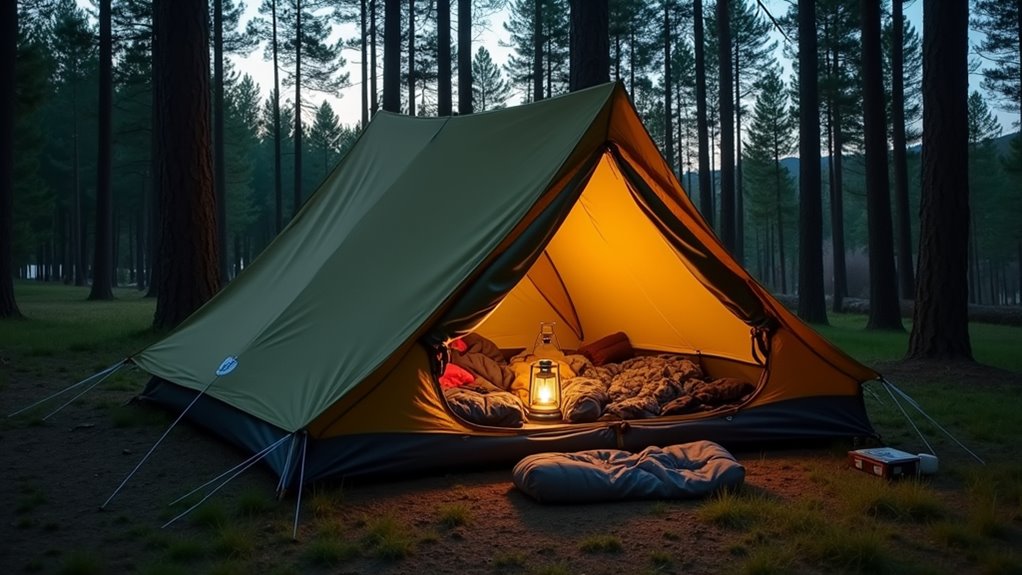
Clear out all your personal items and camping gear first. This keeps everything organized and safe.
Throw away any trash or leftover debris to keep the tent clean. Shake the floor or use a small brush to remove dirt and sand. Fold any rugs or mats neatly. Make sure they stay dry to stop mildew from forming.
Open the windows and door to let fresh air inside. Putting the tent in the sun helps it dry faster and prevents moisture buildup that could lead to mold formation. Packing a wet tent causes mold and weakens the fabric.
Check zippers, seams, and fabric for damage. Fix small problems before storing your tent. This helps your tent stay strong for many trips.
Dismantling Tent Components
Start by taking off the rainfly carefully.
Unclip all attachments gently to avoid damage.
Then, remove the tent poles one by one.
Slide them out slowly without forcing.
This method keeps poles straight and safe.
After detaching, make sure to remove all stakes to prevent any tripping hazards. Additionally, it’s important to ensure no fabric is caught while detaching to avoid damage.
Follow these steps for a quick and smooth tent takedown.
Remove Rainfly Carefully
Remove all stakes from the guylines holding the rainfly. Detach the hooks from the tent’s central hubs carefully. Unzip a door to get inside the tent easily.
Grab the webbing on the roof hub and pull down gently. Lift the rainfly slowly to avoid tears or damage. Check the rainfly for any peeling waterproof layers after removal. It’s also important to ensure the rainfly is completely dry to prevent damp storage which can lead to mold growth. Regular cleaning can help maintain the rainfly’s waterproof coatings and overall durability.
Clean spots with safe solvents like Goo Gone. Let the rainfly dry fully away from direct sunlight. Fold it loosely to stop creases and keep it strong for next time.
This careful process helps your gear last longer and stay in good shape.
Detach Tent Poles Systematically
Detach tent poles carefully.
Start at the points where poles connect. Twist poles gently to unlock joints. Unscrew any screw-in end tips first. This stops damage.
Remove poles one set at a time. Avoid mixing parts. Pull segments apart with soft force. This protects the elastic cords inside. Before removing poles, check for any cracks or breaks that may need attention.
Lay poles flat and straight after taking them down. This stops bending. Use pliers for small, light poles if needed.
Check pole condition before removing. Follow any instructions from the manufacturer. This keeps poles safe during removal. Additionally, ensure the tent is unfastened before collapsing to facilitate smoother pole detachment.
Handling the Frame and Poles
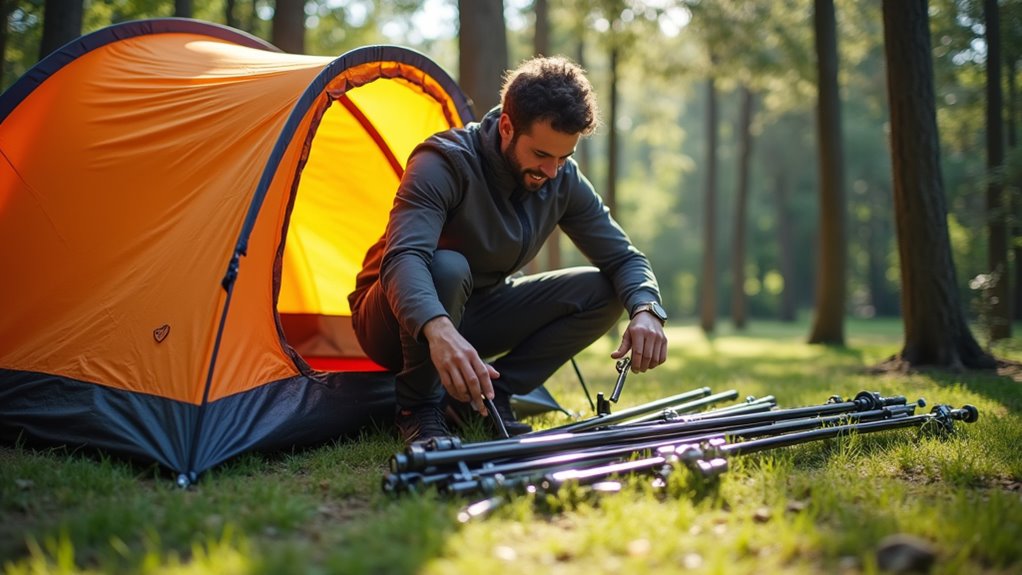
Handle the tent frame and poles with care to ensure safety and ease. Start by taking out the pins or locks that hold the frame parts together.
Remove the poles in order: first the outer poles, then the inner supports. Hold the poles firmly while taking them apart to stop them from falling suddenly. Lower poles slowly instead of dropping them. This prevents damage and injury. Additionally, it’s important to check for cracks in each pole as you go, as this can help prevent future issues.
Check each pole for cracks or dents as you go. Fix any problems right away. Large or heavy poles need two people to control them better. When disassembling, remember to sort them by size or type to help find the right poles next time.
This careful method keeps you safe and helps your tent last longer.
Folding and Packing the Tent Fabric
First, lay the tent flat on the ground. Smooth out all wrinkles carefully. Make sure the fabric is clean and dry. This keeps the tent safe from damage.
Next, fold the tent fabric into thirds or quarters. The fold size depends on your storage bag. Keep the edges flat to avoid puffing. This saves space and protects the fabric.
Then, roll the tent tightly from one end. Add poles and pegs inside the roll if needed. Secure the roll with straps or cords to stop it from unrolling. Additionally, confirm the tent is clean and dry before packing to ensure longevity.
Always close zippers and fasten all hooks before folding. Remove corner pegs only after you have a stable base. This method helps your tent stay neat and ready for your next trip.
Packing the tent this way protects it. It also makes setting up faster next time. Your gear will last longer and stay in great shape.
Storage and Protection Measures
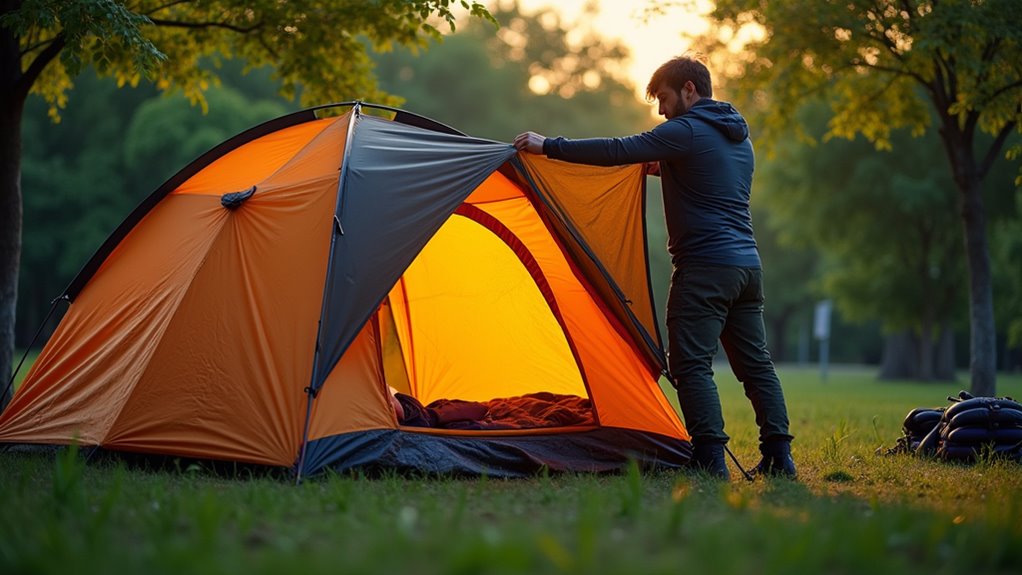
Pack your tent carefully to keep it safe for many trips.
Store it in a cool, dry place with good air flow. Avoid basements and attics because they can be damp.
Check your tent often for mold or tears. Fix small problems fast to keep your tent strong.
This simple care helps your tent last longer and stay ready.
Ideal Storage Conditions
Store your tent in the right place to keep it strong and lasting.
Temperature matters a lot. Keep it cool, between 18°C and 21°C. This stops the material from breaking down.
Humidity should stay near 60-65%. This level stops mold and mildew from growing.
Ventilation is key. Pick a space with good airflow. Avoid basements and attics. They hold dampness and harm your tent.
Follow these steps. Your tent will stay fresh and ready for your next trip.
Regular Maintenance Checks
Regular maintenance keeps your tent strong and ready for camping trips.
Check your tent often for dirt, grime, and old seam tape. Clean it after every trip with mild soap or special tent cleaners. Avoid strong detergents that ruin waterproof coatings.
Look closely at the seams. Seal any cracks with the right seam sealer for your tent fabric.
Dry your tent fully before storing it to stop mold from growing. Store the tent in a cool, shaded place. Don’t pack it too tightly, or dampness will stay inside.
These easy steps help your tent last longer and stay in great shape.
Safety and Efficiency Tips
Safety and speed matter most when taking down a tent. Follow these clear steps for a smooth process:
- Keep people not working away from the area. This prevents accidents.
- Wear hard hats, steel-toed boots, and safety glasses. These protect you from injuries.
- Watch the weather closely. Stop work if winds go above 30–35 MPH. Leave the site quickly to stay safe.
Start by removing the poles and base frame carefully. This keeps the tent steady.
Take out stakes and ropes only after the main parts are down. This reduces tripping risks.
Sort and label each part as you remove it. This helps when setting up again.
Talk often with your team. Good communication keeps everyone safe and ready for any problems.
Follow these steps to take down your tent safely and fast. Safety saves time. Safety saves lives.
Frequently Asked Questions
How Do I Clean My Tent After Use?
Clean your tent soon after camping to keep it strong and ready. Start by shaking out dirt and dust outside. Use a soft brush or cloth with water to scrub tough spots gently. Add a little mild soap if needed, but avoid harsh cleaners. Soak the tent in a mix of water and a gentle cleaner for deep stains. Rinse well to remove all soap. Let the tent dry completely in the shade to stop mold and smells. Store it in a cool, dry place, not in a tight bag. This care helps your tent last many trips.
Can I Machine Wash My Tent Fabric?
Machine washing your tent fabric can damage it. Use gentle spot cleaning instead. Soak small areas with water and mild soap. Avoid harsh scrubbing or strong detergents. This keeps your tent strong and waterproof. Clean your tent after every trip to remove dirt and sweat. Dry it fully before storing to stop mold and mildew. Proper care helps your tent last many camping trips.
What Should I Do if My Tent Gets Moldy?
Mold can damage your tent and make it smell bad. Clean mold fast using vinegar and water. Mix one part vinegar with three parts water. Use a soft brush to scrub the mold gently. Rinse well and dry your tent in sunlight. Sunlight helps kill mold spores.
Keep your tent dry before storing it. Store in a cool, dry place with good air flow. Use a tent spray that stops mold growth. Check your tent often for signs of mold or dampness. Regular care extends your tent’s life and keeps it safe. Mold can grow quickly in damp, warm places. Act fast to protect your gear.
How Can I Repair Small Tears in My Tent?
Small tears in tents need quick fixing to stop water or wind from coming in. Use a tent repair kit with patches and glue made for tents. First, clean the torn area well. Next, put glue on the patch and press it tight over the tear. Wait several hours for the glue to dry completely. This keeps the patch strong and the tent safe. Fixing tears right away helps your tent last longer and keeps you dry outside.
Is It Safe to Store My Tent in a Garage?
Storing a tent in a garage works well. Keep the tent dry and clean to avoid mold. Do not place it on cold concrete floors; use a shelf or wooden pallet instead. Good air flow stops dampness and pests from harming your gear. A dry, ventilated garage protects your tent from damage. This storage method keeps your tent ready for the next trip.
Conclusion
Taking down a tent shows your camping skills. You handled the poles and fabric well. Folding the tent neatly takes practice. Keep trying, and you will improve. Store your gear carefully to keep it safe. This helps your equipment last longer. Ready for your next trip? You will be, with your packed gear. Keep learning, keep camping. Success is just a fold away.
