
How To Setup A Tent
This post contains affiliate links. As an Amazon Associate, we earn from qualifying purchases.
Setting up a tent involves choosing a suitable campsite, laying down a footprint, assembling the tent body and poles, and securing the rain fly for protection. Begin by selecting a level spot away from water and sharp objects, then align a waterproof footprint to your tent’s size. Unfold the tent with the door positioned away from the wind, stake it lightly, and connect the poles in an “X” shape for stability. Finally, attach the rain fly tightly while allowing ventilation. Further detailed steps and tips will be provided later in the article for a comprehensive guide.
Essential Facts in 30 Seconds
- Select a level campsite away from water and sharp objects.
- Use a footprint to prevent water buildup and stabilize the tent.
- Unfold the tent with the door facing away from wind and stake lightly.
- Assemble and secure poles, crossing them for stability; attach clips and guy ropes.
- Install the rain fly for protection and ventilation; tighten guidelines securely.
Selecting a Campsite
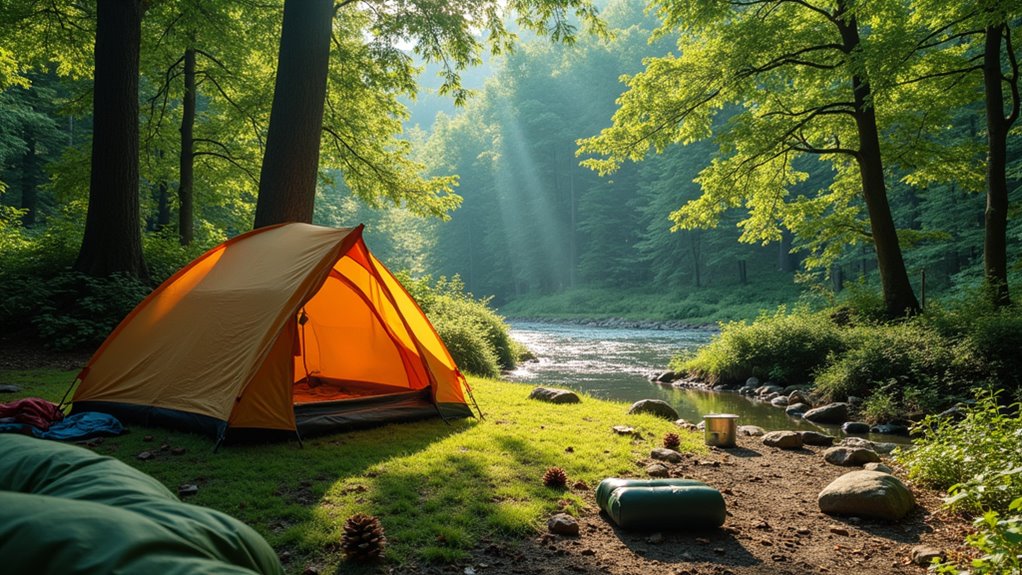
Select a campsite near hiking trails and water sources for easy access. Choose a spot that’s easy to reach, especially if you have any physical limits. Safety comes first.
Stay away from dangerous areas and know about local animals. Pick a flat, firm surface like rock or gravel to protect nature. Avoid camping too close to lakes or rivers to keep the environment safe. Additionally, preparing the ground properly can enhance your comfort and safety during your stay.
Find a place with some shade to stay cool, but also enough sun for solar chargers. Smaller campsites help keep noise low and nature safe. Additionally, consider choosing a flat area for your tent setup to ensure stability and comfort during your stay.
Follow these simple steps for a fun and safe camping trip.
Preparing the Site and Footprint
Preparing the camping site and footprint is key for a good trip. Pick strong, waterproof materials like heavy-duty tarps, polyester, or nylon. Match the footprint size to your tent floor. Add 2-3 inches around the edges to stop overlap.
Follow these steps:
- Remove sharp items like rocks and sticks from the site.
- Spread the footprint flat with the coated side up. Keep it tight before staking. A footprint can also help prolong the lifespan of your tent by protecting it from wear and tear.
- Place the footprint right under the tent center. This stops water from collecting and provides an extra layer of moisture protection to keep your sleeping area dry.
Unfolding and Positioning the Tent Body
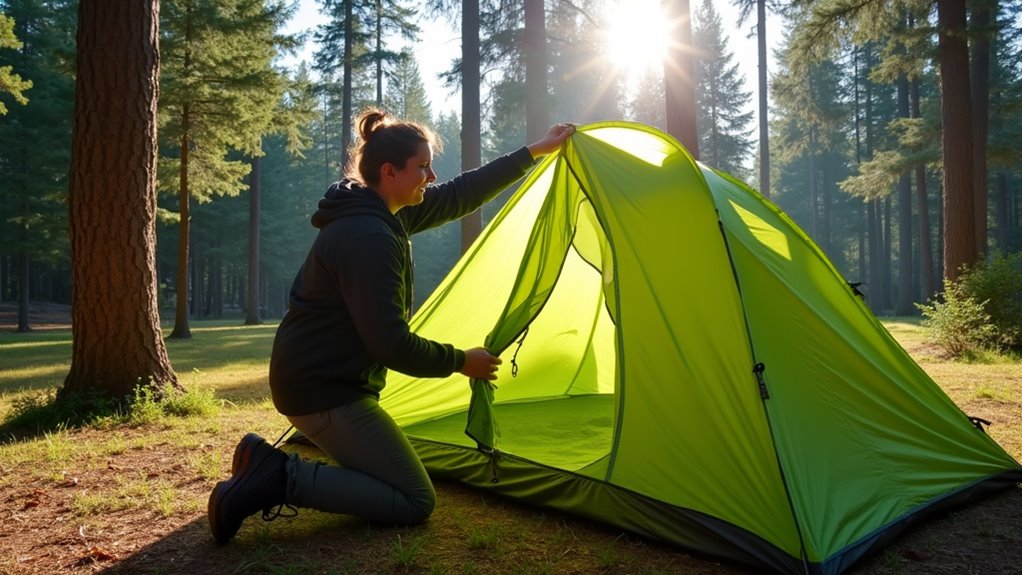
Unfold the tent body carefully to start your camping right. Take the tent out of its bag gently. Check the tent’s door zippers or color tags to find the front side. Spread the tent flat on the ground tarp or footprint. Smooth out wrinkles and untangle the fabric. Pull each corner straight for good support.
Place the tent door away from strong winds. This keeps you comfy and stops wind from pushing the tent. Pick flat, level ground to keep water from pooling under the tent. Avoid spots with low branches or sharp rocks. A flat, dry area is crucial for a stable setup.
Use the tent’s corner loops to stake it down lightly. Leave room to adjust the stakes later. Keep the tent clean and dry. Look for any tears or snags before adding the poles. These steps build a strong base for your camping trip, ensuring you have a flat, dry area for a stable setup.
Assembling and Installing Tent Poles
Place the tent body flat and ready.
Take the tent poles out and unfold them. Connect the pole sections to make full-length poles. Use poles made of fiberglass, aluminum, or steel for strength and flexibility.
Slide each pole into the tent sleeves or holes. Keep poles straight to avoid bending or breaking. Cross the poles in the middle to form an “X” shape. This shape gives the tent stability. Use pins or rings to lock the poles in place.
Lift the poles carefully. Let the side poles lean slightly inward. This pulls the tent tight and shapes it. Start by securing poles at opposite corners. This keeps the tent balanced. Additionally, securing the tent with clips to poles is essential for stability.
Check the pole angles. Tighten the guy ropes to stop sagging. Strong poles and tight ropes make the tent sturdy. To ensure your setup is successful, always refer to the provided instructions for any specific details related to your tent model.
Follow these steps for a safe, strong tent setup.
Adding Rain Fly and Final Adjustments
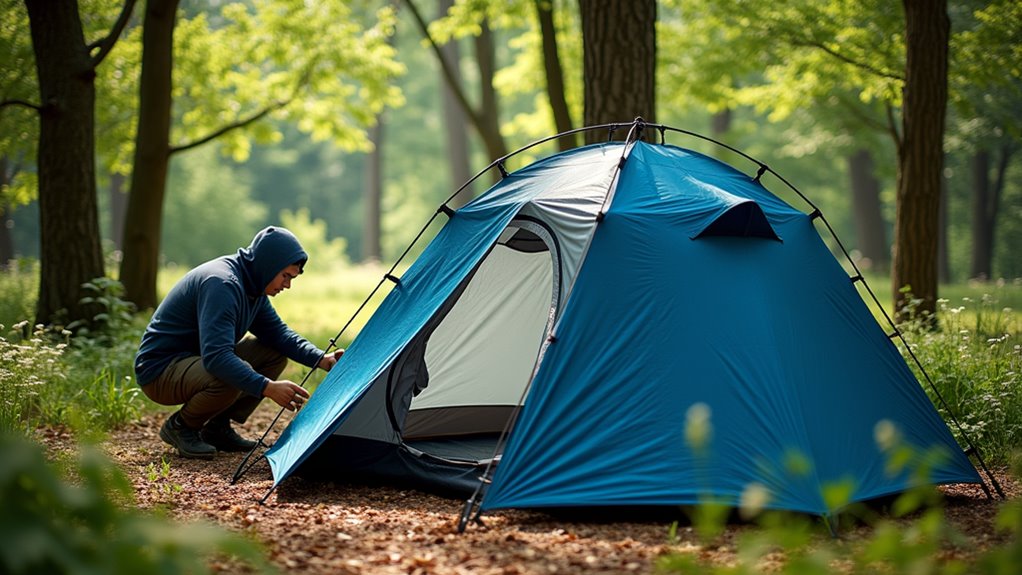
After setting up your tent, add the rain fly for extra protection.
Find the front, back, and sides of the rain fly first. The front has grommets spaced every 18 inches. Make sure doors and vents stay open. Attach the rain fly using sleeves or clips that fit over the tent poles. Use carabiners to hook the loops to tent straps.
Then, stake the guidelines tightly around the tent. This keeps the tent steady during wind or rain. Additionally, it’s important to select elevated ground to avoid water accumulation.
Check all connections carefully. Tighten any loose fasteners. Pull guylines evenly to avoid slack. A tight rain fly stops water from pooling.
Raise the edges of the rain fly to help water run off quickly. This also improves air flow inside the tent. Keep checking the tension and move stakes if the ground shifts or weather changes. This way, your tent stays dry and strong all night. A well-installed rain fly is essential for preventing leaks and condensation.
Frequently Asked Questions
How Do I Clean My Tent After Camping?
Cleaning your tent after camping keeps it strong and fresh. Use mild soap and a soft sponge. Clean only dirty spots gently. Avoid harsh scrubbing that can damage fabric. Rinse well with clean water to remove soap. Let the tent dry fully before storing. Wet tents can grow mold and smell bad. Store the tent in a dry, cool place. Regular cleaning helps your tent last many camping trips.
What Should I Do if It Rains While Camping?
Rain during camping? Act fast. Put a waterproof tarp over your tent. It stops water from getting inside. Wear rain clothes to stay dry and warm. Keep wet shoes and clothes outside the tent. This keeps your sleeping area dry. Water can make cold worse and cause sickness. A dry tent means better sleep and more fun. Don’t forget to check the weather before camping. Be ready. Stay safe and enjoy the outdoors.
Can I Set up a Tent Alone?
Setting up a tent alone is possible and can be easy. Practice setting up your tent at home first. Find a flat, clear area to pitch your tent outdoors. Use simple solo camping tips, like keeping your gear organized and reading the instructions carefully. These steps help you work faster and feel more confident. Many campers enjoy the quiet and freedom of solo camping. You can do it too!
How Can I Prevent Condensation Inside My Tent?
Prevent condensation inside your tent by keeping air flowing. Open vents and doors a little to let moisture escape. Avoid drying wet clothes or gear inside the tent. Pick a dry spot that is higher ground to reduce damp air. Moisture forms when warm breath meets cold tent walls. Good airflow stops water droplets from building up. Remember, a dry tent means a comfortable, warmer night.
What Is the Best Way to Store My Tent?
Store your tent in a dry place away from sunlight. Fold or roll it loosely to keep fabric safe. Use bags that let air pass through, not plastic ones. Keep the tent off the ground to stop bugs and moisture. These steps help your tent last longer and stay strong. Clean and dry your tent before storing it to avoid mold. Proper care protects your gear for many adventures ahead.
Conclusion
Setting up a tent is simple and important. First, pick a flat, dry spot. Clear rocks and sticks away. Lay out your tent on the ground. Insert the poles into the tent sleeves or clips. Push the poles until they lock in place. Next, stake the tent corners firmly into the ground. This stops the tent from moving in the wind. Make sure the tent door faces away from the wind. Tighten all the ropes and lines to keep the tent steady. A strong tent keeps you safe and dry. It also gives you a cozy space to rest and enjoy nature. Each step you take brings you closer to a great outdoor experience.
